Translating a beloved
florist into the
palm of your hand.
How we designed a mobile app that protects the warmth of a brick-and-mortar flower shop while unlocking 3.5× weekly order capacity, B2B revenue, and the foundation for a citywide vending network.
TIMELINE
12 weeks • Q2-Q3 2026
ROLE
Product Manager (Lead)
PLATFORMS
iOS • Android
TEAM
1 PM • 1 Designer • 2 Engineers • Founder
STATUS
In Development • Launch Q3
PROBLEMA loved local florist losing share to delivery-app competitors with no digital channel of its own.
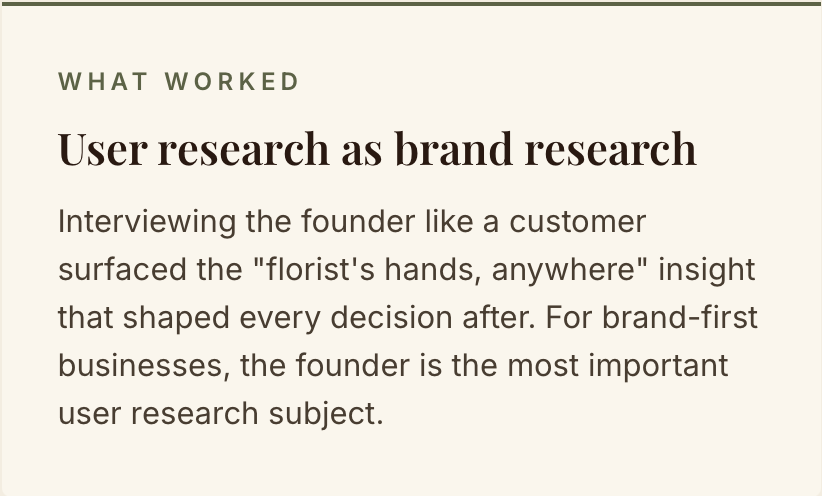
INSIGHTCustomers don't want a flower app — they want their florist's hands, anywhere.
STRATEGYAutomate logistics. Never automate craft. Brand warmth is the moat.
OUTCOME3.5× projected weekly orders · 35% return-customer rate · foundation for B2B and vending.
— 01 —
Context
A five year old brick-and-mortar florist with a lyrical brand identity, weekend foot traffic, and a five-star reputation; yet, a small Instagram presence holding up the entire digital house.
Burs Green Thumbs is the kind of shop a neighborhood loves. Brick walls, mossy textures, fresh peonies in the window. The founder personally curates every featured collection and remembers regulars by their preferred bloom. The brand identity — earthy palette, serif wordmark, tree-and-roots logo — already existed and worked beautifully in print and in-store.
What didn't exist: a way to buy a bouquet without standing in front of the counter. Phone orders averaged twelve minutes each and required pulling a florist off arrangement work. Online searches for "flower delivery + Coconut Creek" surfaced UrbanStems, 1-800-Flowers, and DoorDash — never the local shop with the better product.
I joined to design and prioritize the digital strategy. The brief was deliberately wide: build the app, but also map the path from one neighborhood storefront to a city-wide network of automated floral retail.
Three forces compressing the business — and a fourth that no spreadsheet captured.
Capacity ceiling. ~80 weekly orders, all manually processed. Phone calls were the operational tax that capped growth.
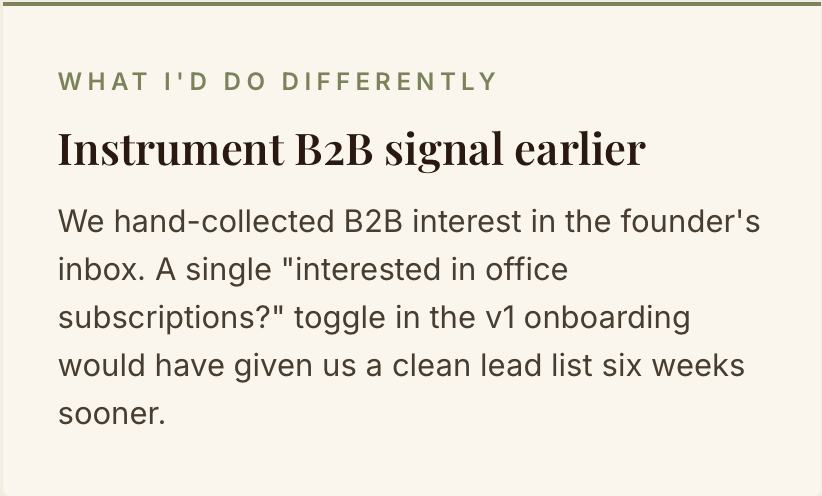
Customer data void. Zero structured customer database. No re-marketing, no birthday reminders, no idea who came back and who didn't. The brand's biggest asset — its regulars — was held in the founder's memory.
Competitor algorithms. National delivery apps captured the search intent before the local shop could. Local was losing on distribution while winning on product.
And the fourth — the brand-warmth tax. Any digital solution that flattened the shop's voice into "10% off your first order!" would damage the very thing customers chose Burs Green Thumbs for. The hardest constraint wasn't technical. It was tonal.
— 02 —
The Problem

— 03 —
Discovery & Insight
We talked to twenty-four customers, audited five competitors, and spent three days behind the counter watching the shop work.
What we did.Twenty-four customer interviews — fifteen current, nine lapsed. A competitor audit of UrbanStems, FromYouFlowers, 1-800-Flowers, and the two highest-rated local shops. Three days of in-shop observation watching how the founder talks to walk-ins. A 200-respondent neighborhood survey via Instagram and the local Facebook group.
What we expected to hear. Price. Convenience. Speed.
What we actually heard. Trust. People said things like "I trust them to make it beautiful, even if I can't be there" and "the bouquet they made for my mom's funeral was the most thoughtful thing in the room." Lapsed customers — the ones I expected to gripe about price — overwhelmingly cited timing: "I needed it that night and couldn't get there before close."
Quantified findings.
· 73% of current customers said they'd order more often if there was an app
· 4× more lapsed customers cited timing over price as the reason they stopped coming
· 68% of orders are gifts (birthdays, anniversaries, condolences); 32% are self-purchase or events
· Each customer averages 3.4 occasions per year — a reorder cadence we were entirely missing
· 62% of survey respondents had used a national flower-delivery app and rated it "fine, not memorable"

— 04 —
Strategy & Principles
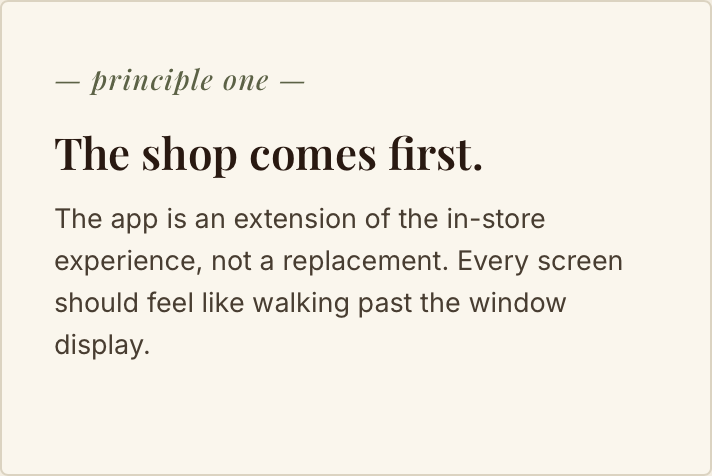
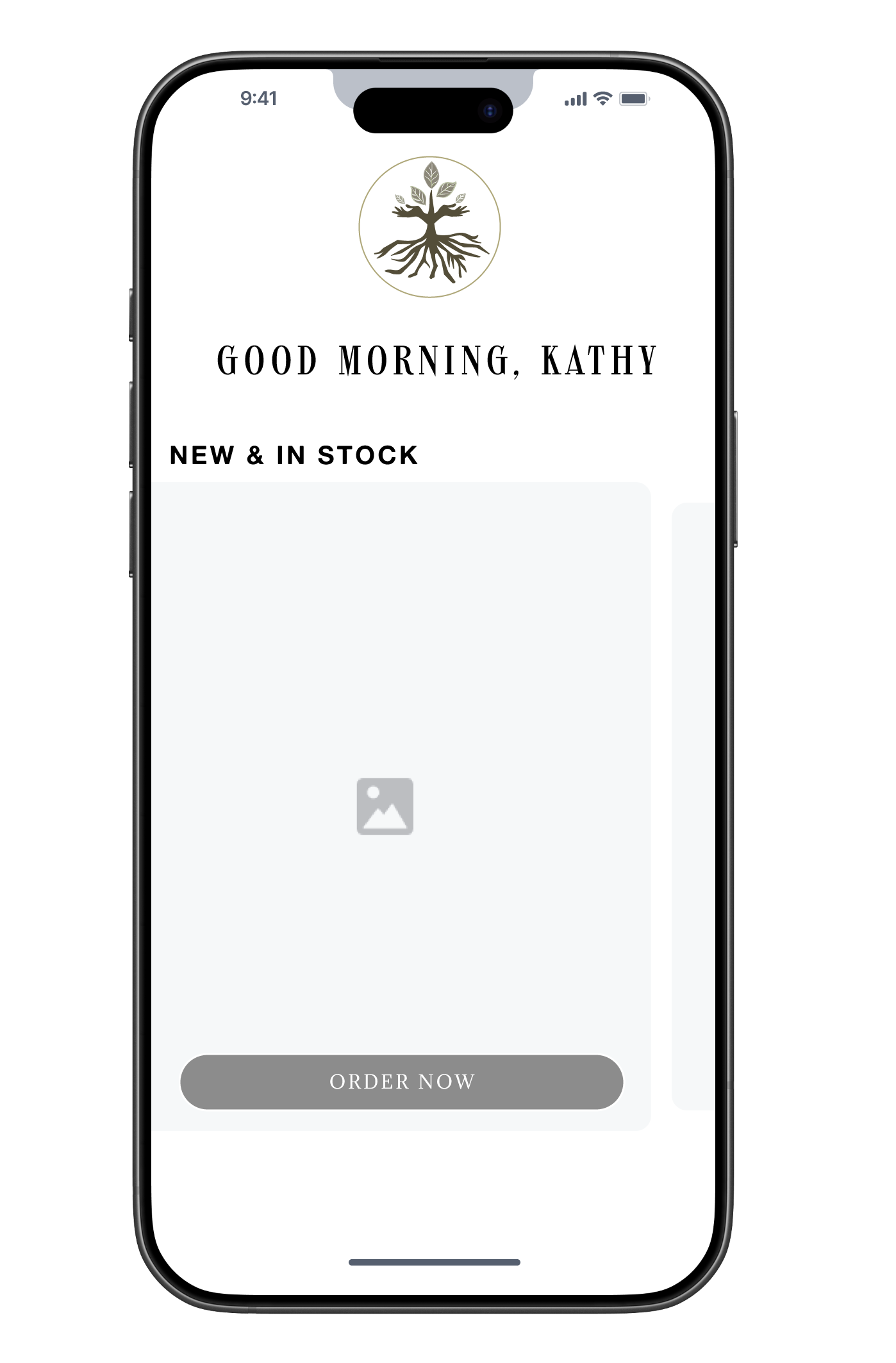
Three principles that turned every product decision into a one-question test.
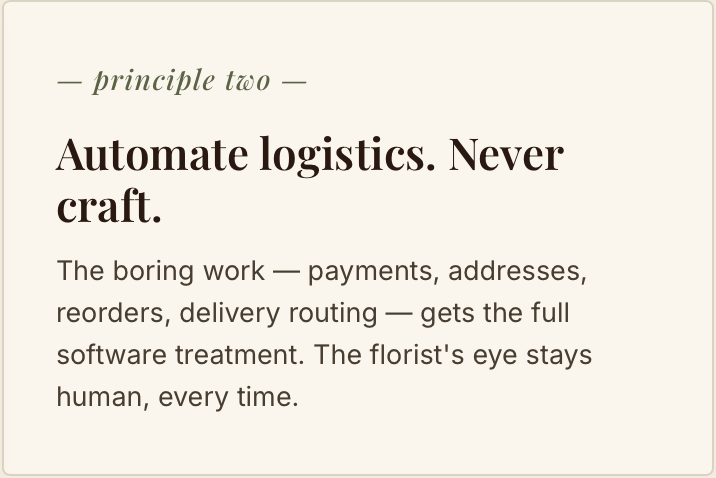
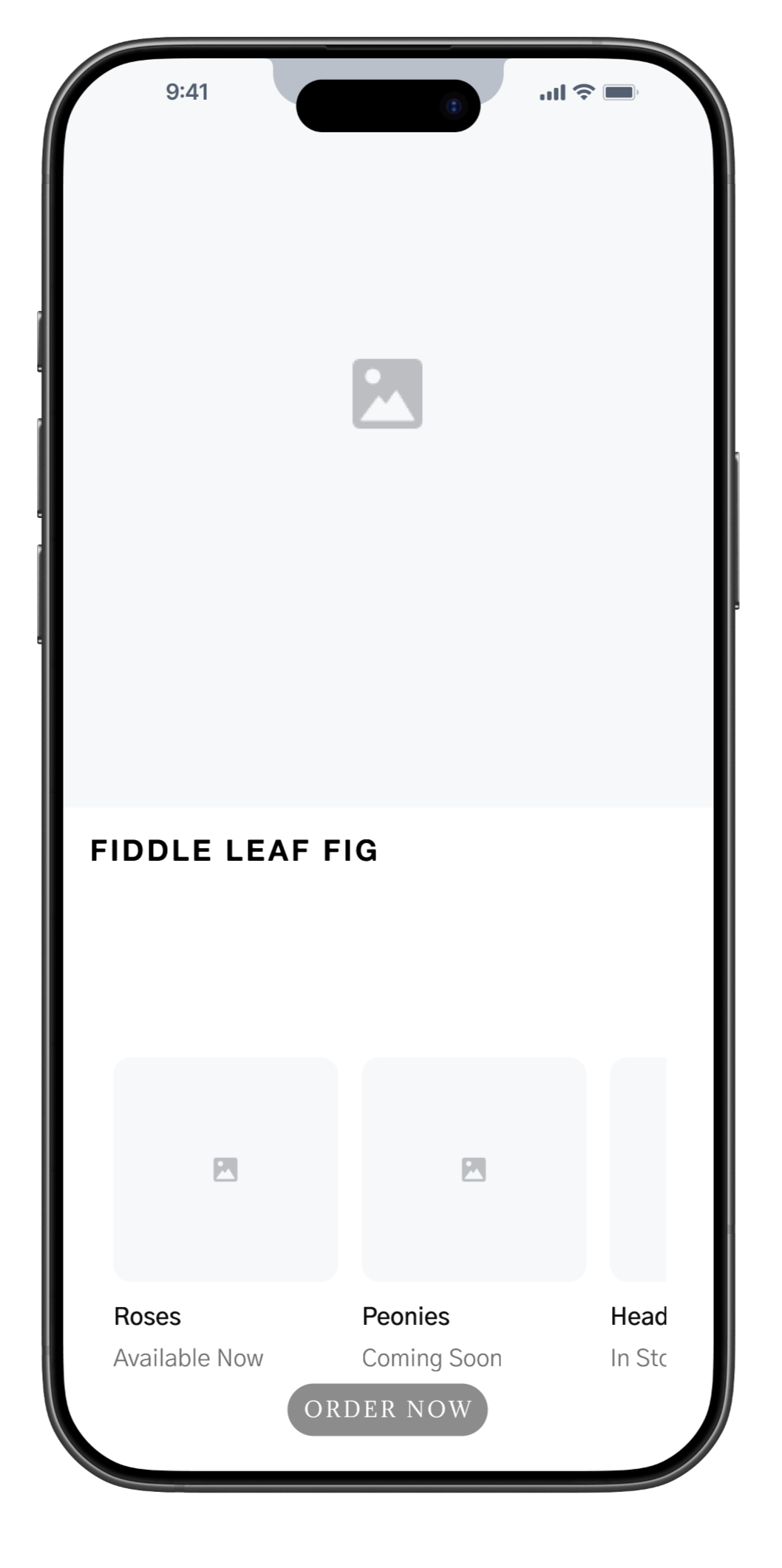
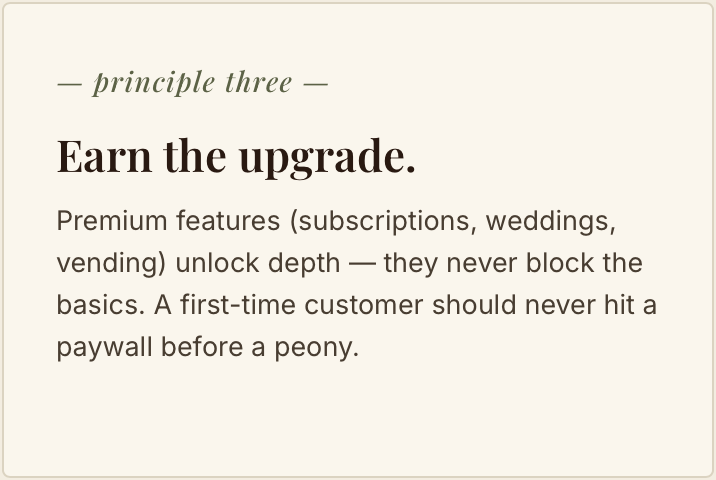
These principles cut through dozens of feature debates. When the question came up — should we A/B test a discount pop-up on home? — Principle One answered it before the data could.
— 05 —
User Experience Flow
The end-to-end journey from app open to delivered bouquet — designed to feel inevitable, not engineered.
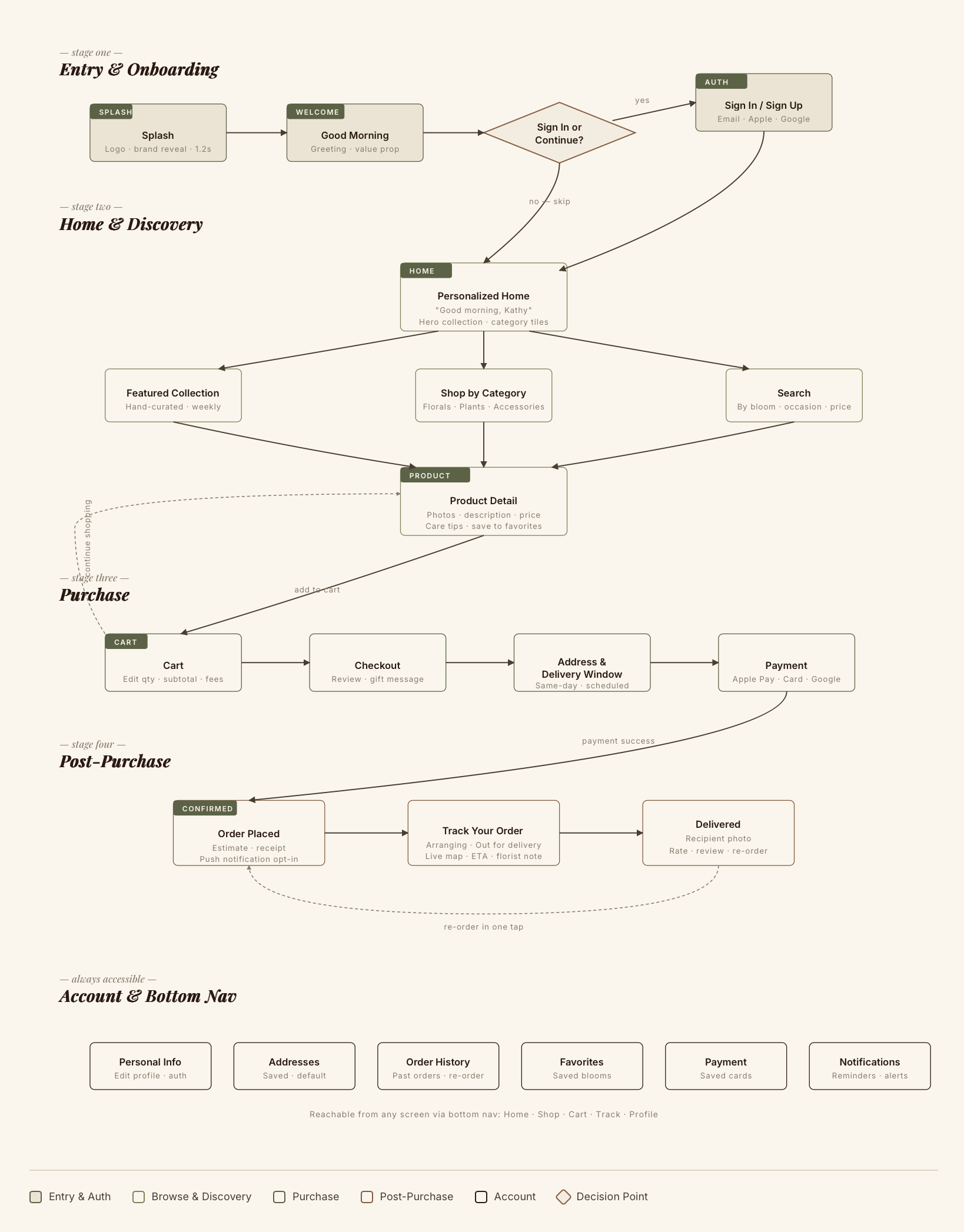
The flow is intentionally short. From a returning customer opening the app to a confirmed order, the happy path is five taps. The longest detour — the first-time user creating an account — is opt-in: customers can browse and even check out as guests, with sign-up nudged at the moment of clearest value (saving an address for next time).
— 06 —
Execution & Key Decisions
Twelve weeks. Twenty-eight defined screens. Five trade-offs that shaped the product.
What I led. Wrote and prioritized the v1 PRD across all 28 surfaces. Designed the system on top of the existing brand identity (logo, palette, typography). Coordinated with two engineers on the data model for personalization, the delivery-zone logic, and the order-tracking pipeline. Ran weekly check-ins with the founder to keep the brand voice in every copy review. Defined success metrics tied to the North Star — Weekly Bouquets Delivered — and instrumented analytics from day one.





— 07 —
Outcomes & Business Impact
Targets set against a real baseline. The app launches Q3 2026 — these are the numbers we are accountable to.
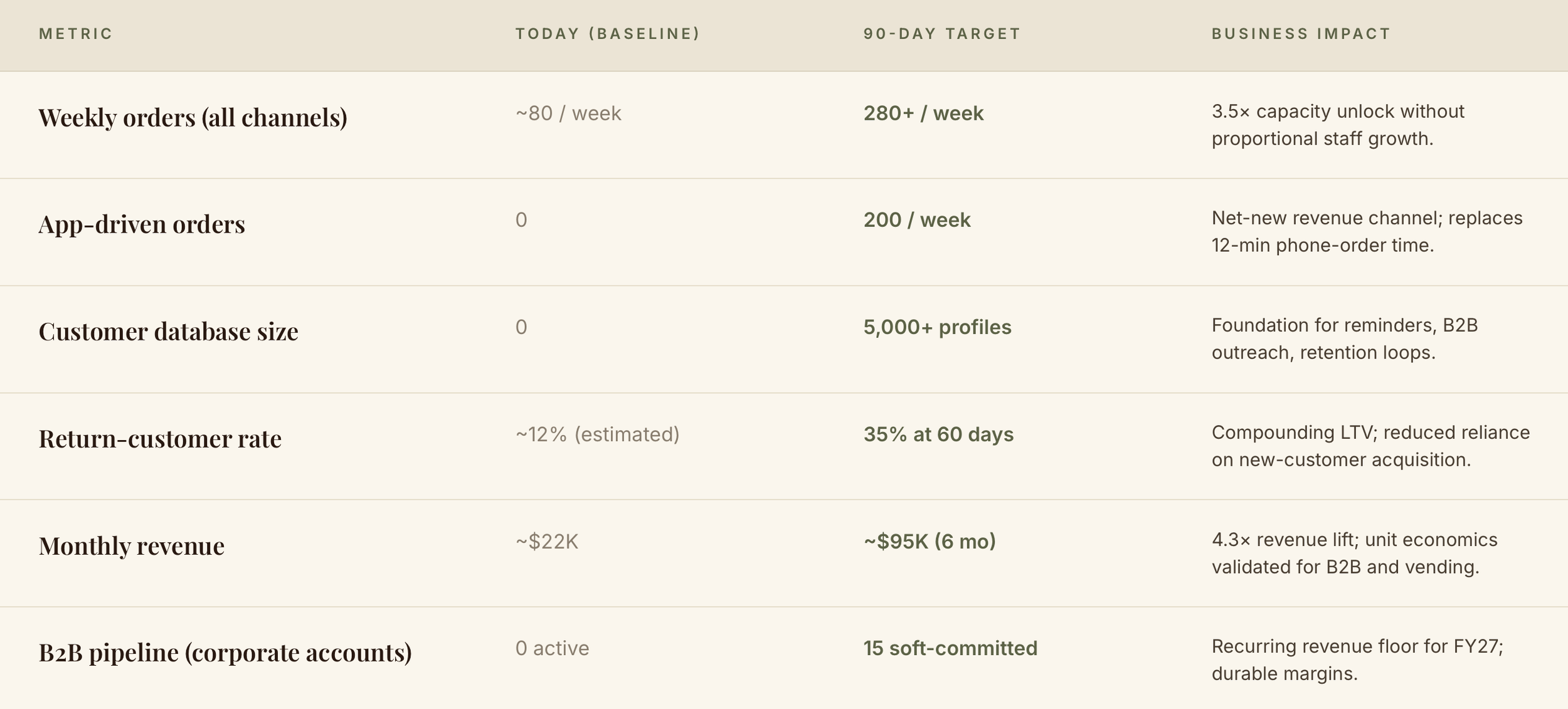
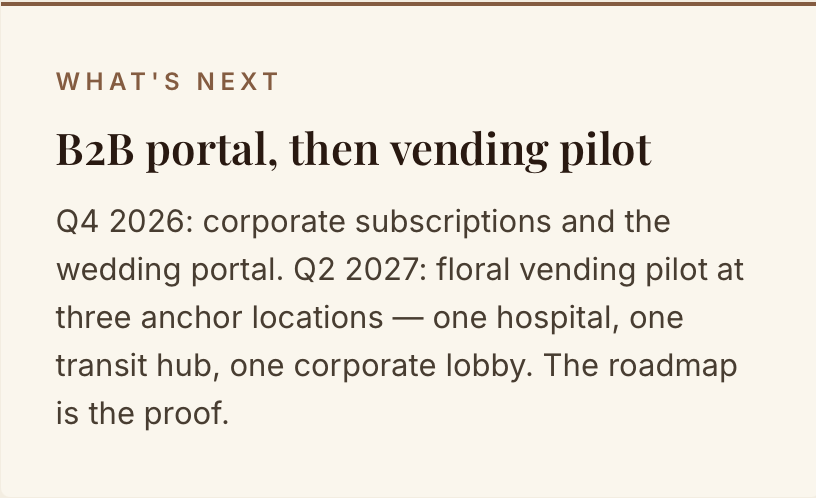
The strategic value beyond the numbers. The same data infrastructure powering the app — customer profiles, order history, delivery routing, real-time inventory — is what makes the floral vending machine network economically viable in 2027. Building the app right is what unlocks the next two product lines. The MVP isn't just a delivery app; it's the operational backbone for the entire three-year vision.
— 08 —
Reflections & What's Next
What I learned, what I'd do differently, and where this product goes in 2027.